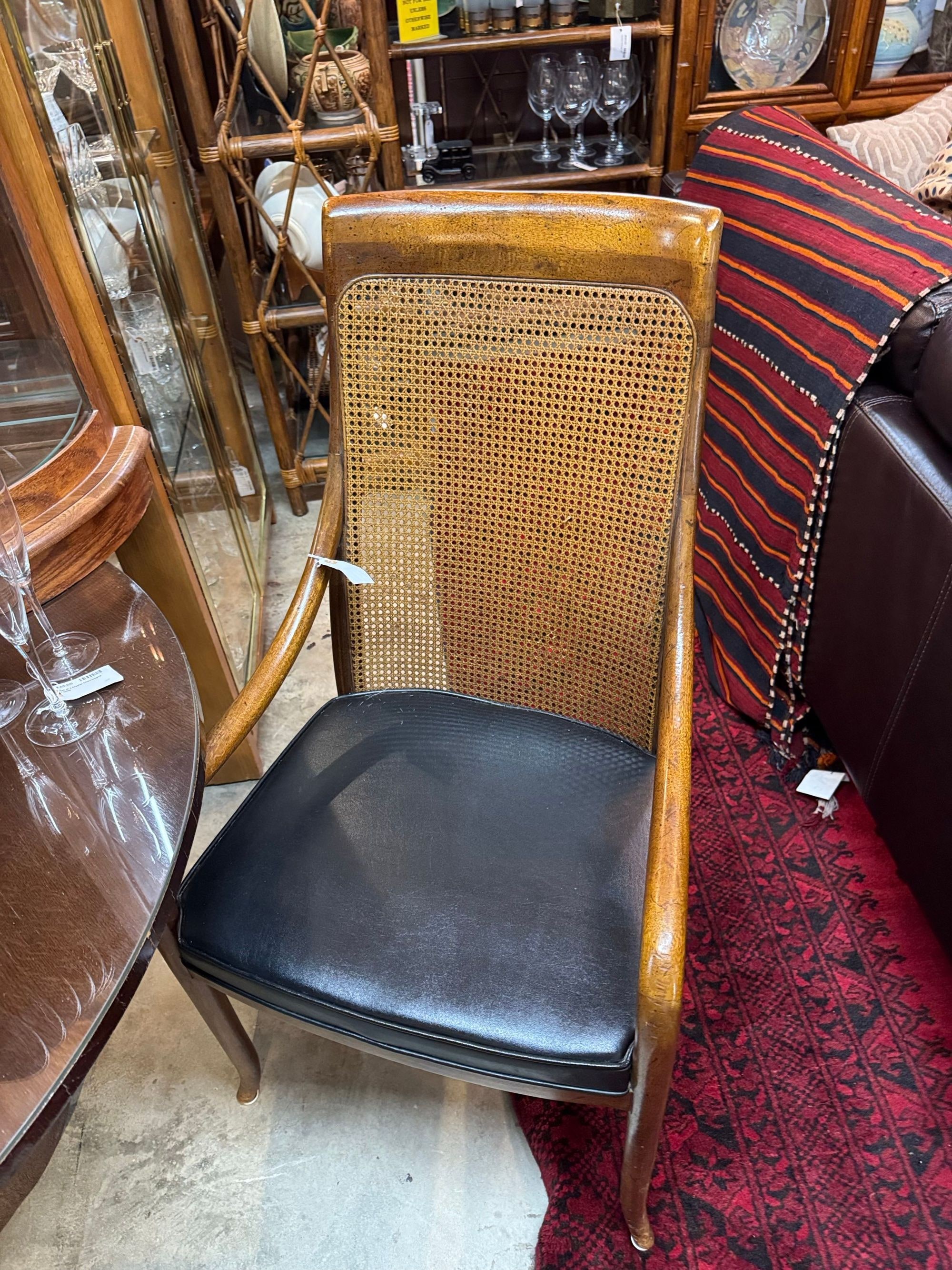
Mid-Century Drexel Heritage Cane Back Armchair with Black Upholstery
Description
This armchair embodies the Mid-Century Modern aesthetic, characterized by its clean lines, organic curves, and the harmonious blend of materials. The frame appears to be crafted from a warm-toned wood, possibly walnut or teak, showcasing a natural grain. A distinctive feature is the cane-woven back, a popular design element during the mid-20th century, offering both visual lightness and tactile texture. The seat is upholstered in black material, likely vinyl or leather, providing a sleek contrast to the wood and cane. The overall design suggests a functional yet elegant piece, suitable for a living room or study, reflecting the era's emphasis on comfort and sophisticated simplicity. The chair is likely from the Drexel Heritage brand, potentially from their 'Accolade II' or 'Consensus' collections, given the prevalence of similar items in historical sales.
Categories
Stories
- Mid-Century Modern design, flourishing roughly between the 1930s and 1960s, emerged as a response to the post-World War II era's optimism and technological advancements. It embraced organic and geometric forms, functionalism, and a blend of natural and man-made materials. Designers like Charles and Ray Eames, George Nelson, and Eero Saarinen revolutionized furniture design, emphasizing simplicity, comfort, and accessibility. The use of materials such as bent plywood, molded plastic, and cane reflected a desire for innovation and a departure from traditional, ornate styles. This aesthetic continues to be highly sought after for its timeless appeal and adaptability to contemporary interiors.
- Cane webbing, a traditional material derived from the outer bark of rattan palms, experienced a resurgence in popularity during the Mid-Century Modern period. Its natural texture, breathability, and visual lightness made it an ideal complement to the period's characteristic wooden furniture frames. The intricate woven patterns, often in a hexagonal or circular weave, added a decorative element without compromising the furniture's minimalist ethos. While labor-intensive to produce, cane webbing offered a sustainable and aesthetically pleasing alternative to solid wood panels, contributing to the airy and sophisticated feel of many iconic Mid-Century designs.