

French Empire Mahogany and Ormolu Commode
Description
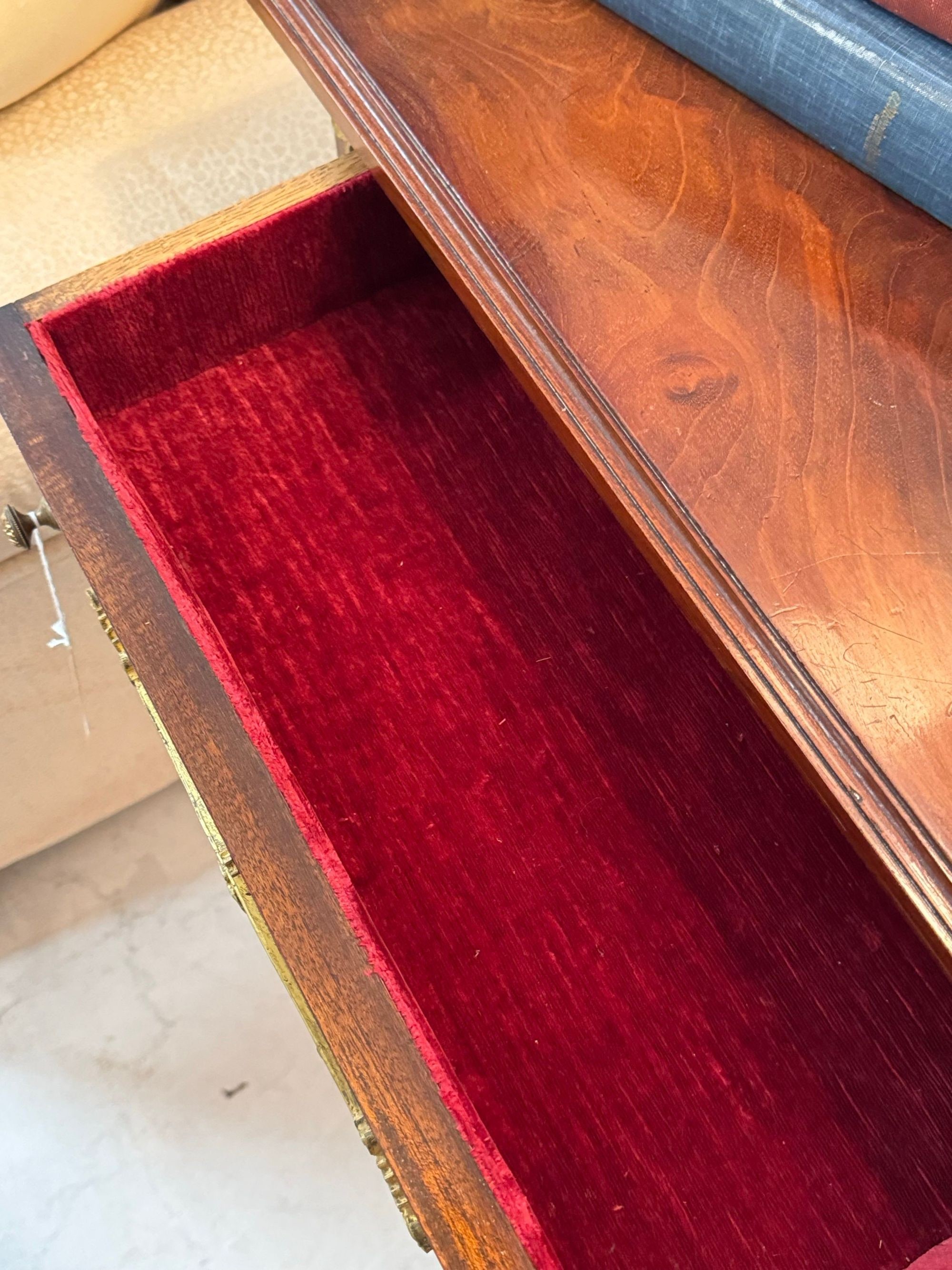
This exquisite commode embodies the grandeur of the French Empire style, characterized by its rich mahogany wood and ornate gilded bronze mounts. The primary wood appears to be mahogany, possibly with a burl veneer on the top surface, showcasing a deep, warm reddish-brown hue. The commode features a single drawer above a cabinet door, both adorned with classical motifs, including a central winged figure on the door and delicate scrolling acanthus leaves and lyres on the drawer front and sides. The interior of the drawer is lined with a deep red velvet, suggesting a high-quality finish and a specific purpose for its contents. The overall construction is robust, with clean lines and a polished finish that speaks to its age and craftsmanship.
Categories
Stories
- The French Empire style, flourishing under Napoleon I from roughly 1804 to 1815, drew heavily on classical Roman and Greek aesthetics, combined with Egyptian influences from Napoleon's campaigns. Key characteristics include rich, dark woods like mahogany, often with burl veneers, and prominent use of gilt-bronze (ormolu) mounts depicting classical motifs such as laurel wreaths, swans, lyres, eagles, and mythological figures. Furniture from this period was designed to convey power, grandeur, and order, often featuring strong, architectural lines and a sense of symmetry. This style aimed to evoke the glory of ancient empires and was widely adopted across Europe.
- The use of gilt-bronze mounts, or ormolu, was a hallmark of high-quality French furniture from the 18th century through the Empire period. These decorative elements were meticulously cast, chased, and gilded to achieve a lustrous finish that contrasted beautifully with dark woods like mahogany. The skilled artisans who created these mounts were often specialized craftsmen, and their work significantly contributed to the perceived value and artistry of the furniture. While specific makers are not identified from the images, the quality of the mounts on this cabinet suggests it was produced by a reputable workshop capable of executing detailed classical designs.