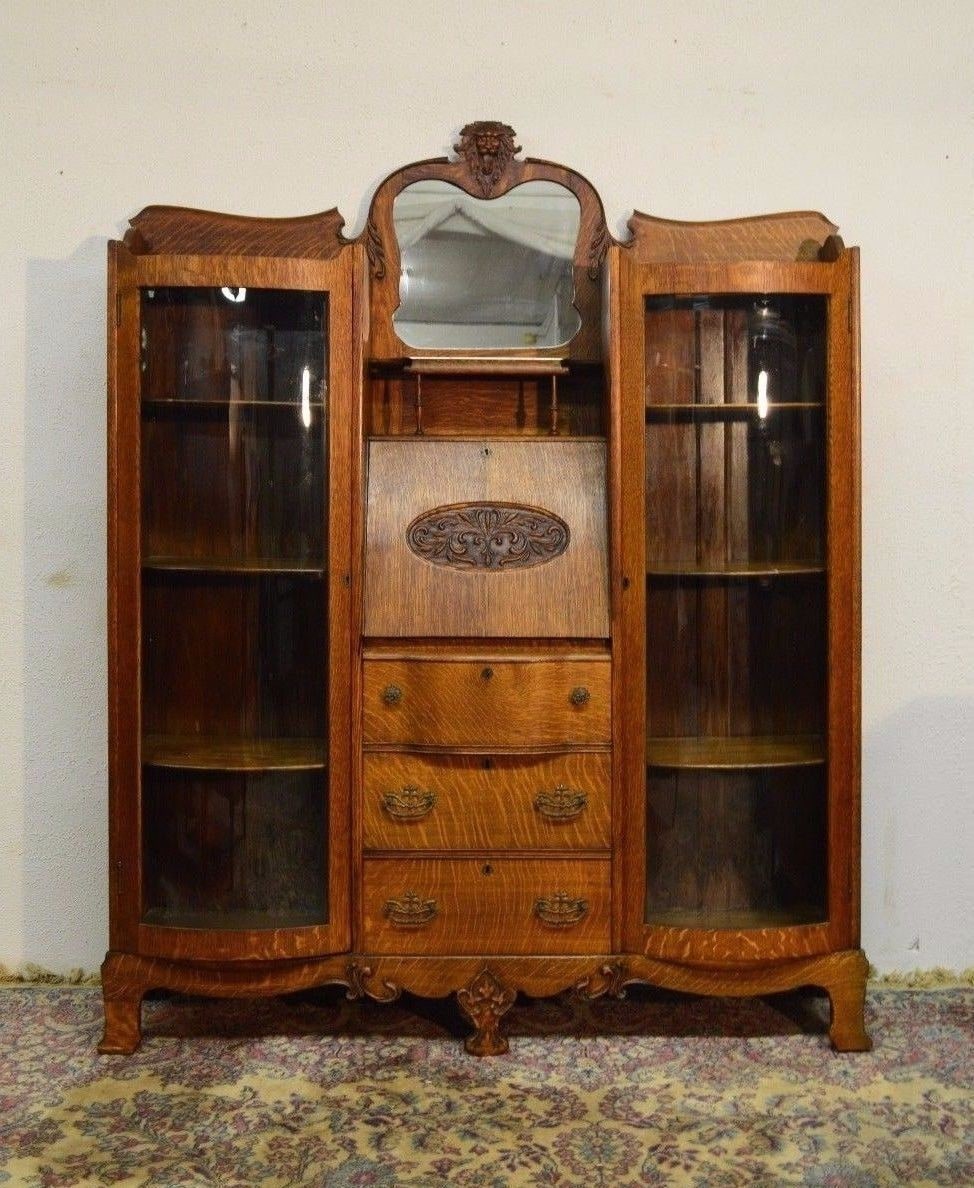
Antique Quarter Sawn Oak Side by Side Secretary Bookcase with Mirror
Description
This antique secretary bookcase is crafted from quarter-sawn oak, exhibiting the characteristic ray fleck pattern. The piece features two glass-fronted display cabinets on either side, with adjustable shelves. The central section includes a pull-down desk (secretary) with carved oval inlay, three drawers below with ornate brass hardware, and a decorative carved crest above the mirror. The overall style suggests the Arts and Crafts or Mission era, with its emphasis on natural wood and handcrafted details. The mirror at the top is framed by a carved crest, possibly depicting a lion's head, adding a distinctive architectural element. The piece displays a rich, warm patina consistent with age and use.
Categories
Stories
- The Arts and Crafts movement, which emerged in the late 19th century, was a reaction against the perceived dehumanization of industrialization. It championed traditional craftsmanship, the use of natural materials, and the integration of art into everyday life. Furniture from this era, like this secretary bookcase, often features solid wood construction, simple yet elegant lines, and decorative elements inspired by nature or medieval forms. The use of quarter-sawn oak was particularly favored for its stability and distinctive grain pattern, known as ray fleck. This style emphasized functionality and aesthetic beauty, making pieces like this both practical and artistic. (https://www.vam.ac.uk/articles/the-arts-and-crafts-movement)
- While the maker of this specific piece is not identified, furniture of this quality and style was produced by numerous American workshops during the late 19th and early 20th centuries. Prominent makers associated with similar designs include Gustav Stickley, L. & J.G. Stickley, and the Elgin A. Simonds Company, among others. These companies often employed skilled artisans who produced furniture that was both durable and aesthetically pleasing, reflecting the ideals of the Arts and Crafts movement. Unmarked pieces are common, and identification often relies on stylistic analysis and comparison to known examples. (https://www.stickley.com/about-us/history/)
- The provenance of this secretary bookcase is not provided. However, pieces of this nature were typically found in middle-class to affluent homes during the late Victorian and Edwardian eras. They served as functional furniture for writing, storage, and display, often becoming heirlooms passed down through generations. The presence of a mirror suggests it might have been placed in a parlor or study, where it would have been a focal point. Documented provenance, such as original receipts, family history, or previous ownership by notable individuals, can significantly increase the value of antique furniture. (https://www.metmuseum.org/toah/hd/amcr/hd_amcr.htm)